Email Marketing
The Abandoned Cart Emails That Finally Made Money
I rewrote three abandoned cart email examples in a weekend and watched dead carts turn into sales. Here's exactly what changed.
Disclosure: This article contains affiliate links. If you sign up through them we may earn a commission — at no extra cost to you. We only recommend tools we believe are genuinely useful.
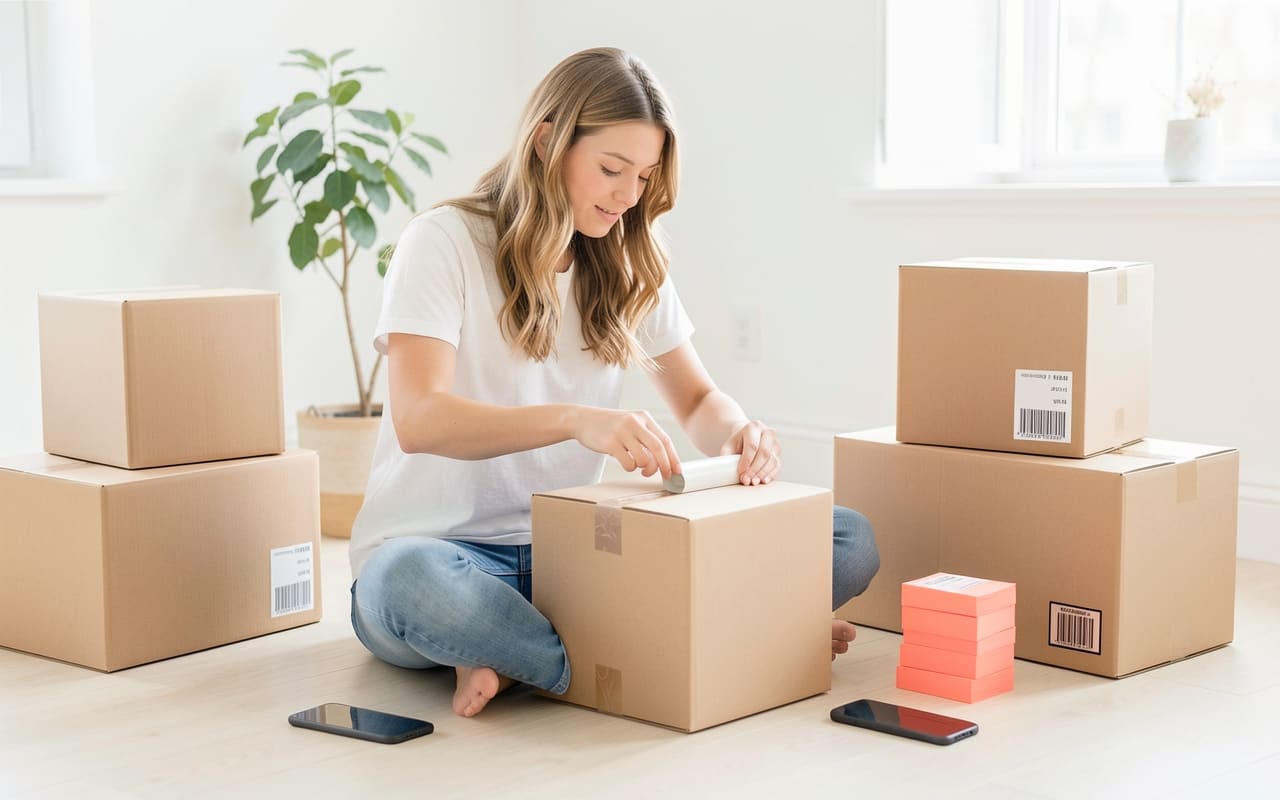
The first time I sent an abandoned cart email, it took me four minutes to write. “Looks like you left something in your cart!” A stock coupon code. A big yellow button. I hit send on a batch of forty and went back to packing orders on my kitchen floor.
Three sales. Out of forty. I remember staring at that number thinking the whole tactic was overrated — people who abandon a cart, I figured, just weren’t going to buy. It took me another two months of low-grade guilt (and one very patient friend who runs a candle shop) to figure out the problem wasn’t the tactic. It was the email.
The one-email mistake almost everyone makes
Most small stores send exactly one abandoned cart email, and it usually looks like the one I described above — generic, coupon-first, sent whenever the platform’s default template feels like firing. That single email is doing three jobs at once: reminding, persuading, and discounting. It’s rushed, and shoppers can tell.
What actually works is a short sequence, not a single blast. I rebuilt mine as three emails spaced across about 72 hours, and each one had exactly one job:
- The reminder (sent 1–2 hours after abandonment) — no discount, just a clear photo of the item and a one-click way back to checkout.
- The reassurance (sent the next day) — answers the objection that’s actually stopping people, like shipping cost or sizing, sometimes with a review or two.
- The nudge (sent 2–3 days later) — a small, honest incentive, framed as “still thinking about it?” rather than a panic-sale.
| Timing | Job | Discount? | |
|---|---|---|---|
| Reminder | 1–2 hrs later | Show the item, remove friction | No |
| Reassurance | Next day | Answer the real objection | Rarely |
| Nudge | 2–3 days later | Give a reason to act now | Small, if any |
The week I split my one email into this three-part sequence, my recovered-cart rate roughly tripled. Not because I’d discovered some secret discount code — because I’d stopped asking one email to do a job that needed three.
What the actual emails looked like
Here’s roughly what each one said, stripped down to the parts that mattered.
Email 1 — the reminder. Subject line: “Still thinking about the lavender candle set?” Not “you forgot something” — the actual product name, because that’s what makes it read like a person noticed, not a script. Body: one photo of the exact item, one line (“It’s still in your cart, ready when you are”), one button back to checkout. No coupon. No urgency. Just make it easy.
Email 2 — the reassurance. This one earns its place by answering the objection that’s actually stalling the sale — for a candle shop, that was almost always shipping cost or “will this arrive in time.” So the email said so directly, plus a couple of real customer lines about scent strength. This is a composite example, not a specific customer; your numbers will vary. No discount here either — just proof and information.
Email 3 — the nudge. Only now does a small incentive show up, and it’s framed as closing a loop, not creating panic: “Still deciding? Here’s 10% off if you’re ready.” By this point the shopper has already seen the product twice and had their objection answered, so the discount is a nudge, not a bribe.
The order matters as much as the words. Lead with a discount and you train your list to abandon carts on purpose, waiting for the coupon. Lead with helpfulness, and the discount becomes a genuine reason to act rather than the whole pitch.

Setting it up without a complicated stack
I’d assumed this kind of sequence needed some enterprise ecommerce suite. It doesn’t — it needs a cart-abandonment trigger and three pre-written emails on a delay. I ended up rebuilding the whole thing inside systeme.io, which let me set the trigger and the three-email delay sequence without stitching together separate tools for the store, the emails, and the automation. If you’re earlier in the process and haven’t even mapped out your automated emails yet, 7 Email Automation Sequences Every Beginner Needs is a good next stop before you get to cart recovery specifically.
If your abandoned cart emails are landing well but your actual product page is what’s losing people before checkout even starts, that’s a different fix — Stop ‘Optimizing’ Your Sales Page. Fix the Offer Instead. covers that half of the funnel.
What changed
Six months later, cart recovery is one of the few things in my store that runs entirely on its own. I don’t write these emails anymore — I wrote them once, and they’ve been quietly turning abandoned carts into orders every day since, at a rate that single generic reminder never got close to.
The lesson wasn’t about tools or templates, in the end. It was that a cart isn’t abandoned because someone doesn’t want the thing. It’s abandoned because something interrupted them — and one rushed, coupon-first email was never going to be the thing that brought them back. Three short, patient ones were.
Frequently asked questions
- What should an abandoned cart email say?
- The first one should simply remind the shopper what they left behind, show the product clearly, and make checkout one click away. Save any discount or urgency language for the second or third email — leading with a coupon trains people to abandon carts on purpose.
- How many abandoned cart emails should I send?
- Three is the sweet spot for most small stores: a gentle reminder within an hour or two, a helpful follow-up with social proof or an FAQ the next day, and a final nudge with a small incentive two to three days later. Sending more than that usually just adds unsubscribes without adding sales.
- What is a good subject line for an abandoned cart email?
- Name the actual product or category instead of writing something generic like 'you forgot something.' Something like 'Still thinking about the [product]?' outperforms vague copy because it reads like a real person noticed, not a bot.
- Do abandoned cart emails actually work?
- They're one of the highest-return automations in ecommerce because you're emailing someone who already decided to buy — they just got interrupted. The return depends heavily on the copy and timing, which is why the same template can flop for one store and work well for another.
Keep reading
How to Make Money With a Small Email List (300 Is Enough)
A 300-person email list can pay you before a big one ever would. See the one-offer, three-email setup that turns a small list into real sales. Read on.
Read →
All-in-One vs Piecing It Together: Fixing Beginner Email Mistakes
The common email marketing mistakes beginners make usually come from the tools, not the writing. Here's the honest comparison.
Read →
The Week I Finally Got My First 100 Email Subscribers
I spent three months chasing followers before I learned the one list-building move that actually works. Here's what got me my first 100 subscribers.
Read →