Sales Funnels
The Upsell Made More Than the Product. Here's the Funnel.
The upsell often outsells the main product. Here's the exact funnel order that makes it happen, without feeling pushy.

Disclosure: This article contains affiliate links. If you sign up through them we may earn a commission — at no extra cost to you. We only recommend tools we believe are genuinely useful.
The upsell outsold the product it was attached to. Not by a little — by more than double, on a $27 offer that quietly turned into $84 per customer, because the second thing people said yes to cost more than the first.
That’s not a trick. It’s the entire logic of an upsell funnel: the hardest part of any sale isn’t getting someone to spend $10 more, it’s getting them to decide to buy at all. Once that decision is made — card entered, purchase confirmed — the resistance that kept them from buying in the first place is gone. An upsell funnel exists to catch that exact moment and offer one more relevant thing before it passes.
Why the order matters more than the offer
Most people build this backwards. They pick a product they want to sell more of, bolt it onto checkout, and wonder why nobody takes it. The order of an upsell funnel is what makes it work, not the discount or the copy. It goes like this:
- Someone lands on your main offer and buys it.
- Immediately — no new checkout page, no re-entering their card — they see one related offer.
- They click yes or no. Either way, they land on a thank-you page.
That middle step is where almost every solo seller gets it wrong. If step two sends someone back to a full checkout page where they have to type their card number again, you’ve broken the momentum, and most people just close the tab. This is the same lesson from how I replaced spreadsheet chaos with a free CRM: the tool matters less than whether the process has friction in it. A one-click upsell removes the friction entirely — the payment method is already on file, so accepting is a single tap.
What actually makes a good upsell offer
The upsell only works if it’s obviously connected to what someone just bought. If it doesn’t extend, speed up, or complete the original purchase, it reads as a cash grab. Some patterns that consistently work:
- The done-for-you version. They bought the template. The upsell is you customizing it for them.
- The faster path. They bought the course. The upsell is 1:1 feedback on their first assignment.
- The expansion pack. They bought one product. The upsell is three more in the same category, bundled.
- The removal of a limit. They bought the basic tier. The upsell removes a cap — more seats, more storage, more uses.
Here’s a composite example, not a specific customer: someone selling a $19 social media caption pack adds a $47 upsell — 90 more captions organized by niche. About a third of buyers take it, because it’s the exact same thing they already decided they wanted, just more of it. Your numbers will vary, but the shape holds: the upsell isn’t a new decision, it’s more of the decision they already made.
If you haven’t built the base offer yet, start there — How to Build Your First Sales Funnel in a Weekend walks through getting the main product and checkout live before you layer an upsell on top of it.
The downsell: your second chance
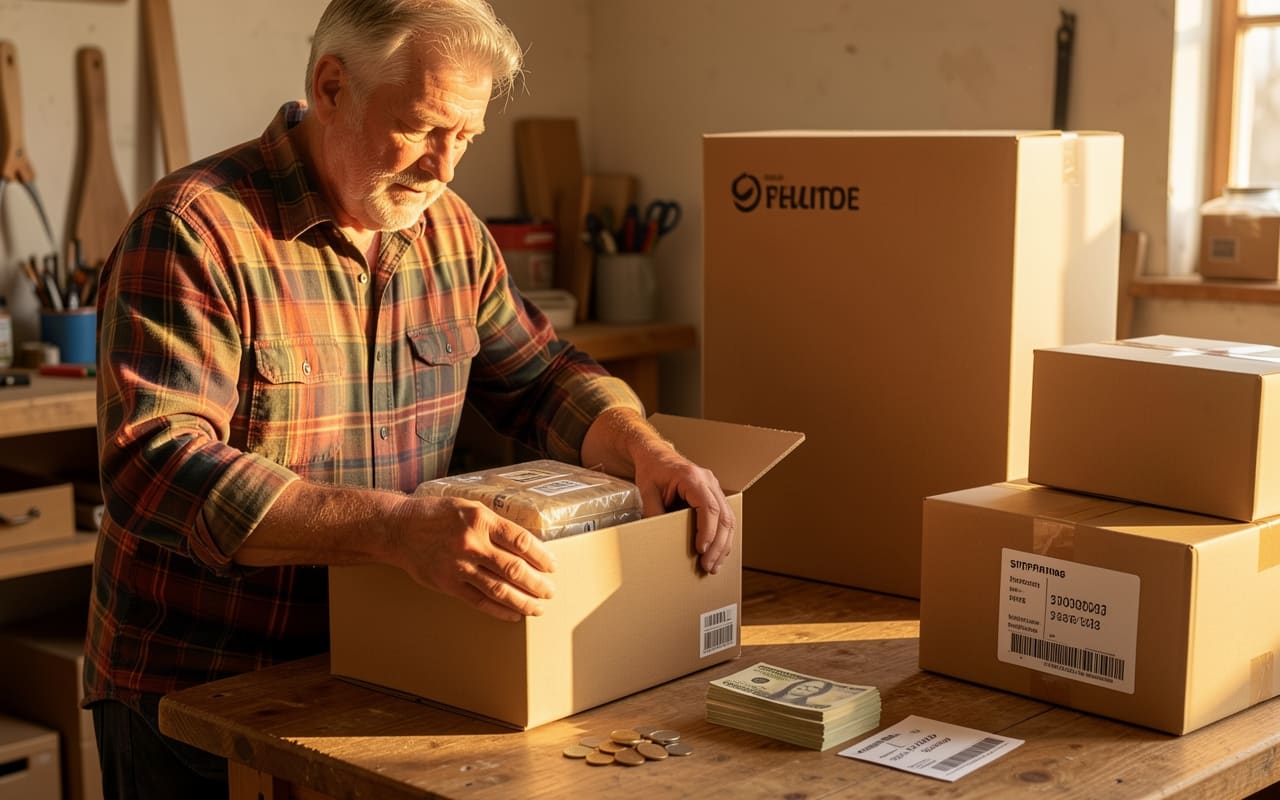
Not everyone takes the upsell. A downsell page catches the people who said no — a scaled-down or cheaper version of the same offer, shown instead of just dumping them straight to the thank-you page. Someone who won’t pay $47 for the full expansion pack might still take a $17 version with a third of the content. Without a downsell, you lose that sale outright. With one, you recover a meaningful slice of it.
Here’s how the three options stack up, so you can see why skipping any one of them leaves money on the table:
| Path | What they see | What you keep if they say no |
|---|---|---|
| Upsell only | One offer, no fallback | Nothing |
| Upsell + downsell | Full offer, then a lighter version if declined | A recovered partial sale |
| No upsell at all | Straight to thank-you page | Nothing, and no attempt made |
Building it without stitching five tools together
The technical part of this used to be the hard part — a checkout page, a separate payment processor, an upsell plugin, and an email tool that all had to talk to each other correctly, or the one-click charge would silently fail. That’s largely gone now. A platform like systeme.io builds one-click upsells directly into its funnel editor: you set the main offer, add an upsell step, add a downsell step, and the saved card carries through automatically. No plugin, no separate processor, no risk of the handoff breaking between tools.
If you’re not sure your current setup can even do this, that’s usually the tell that it’s time to consolidate — the same conclusion reached in what 5 failed tools taught me about all-in-one marketing.
Building yours this week
Start with the product you already sell. Ask what the very next thing someone would want, five minutes after buying it, actually is — not what you want to sell more of, but what they’d want more of. Build that as a single upsell step, set a lighter downsell behind it for the people who decline, and confirm the checkout carries the card through without asking for it twice. That’s the whole funnel. Launch it on your next sale and watch the upsell take-rate — it’ll tell you within a day whether the offer earned its place in the sequence.
Frequently asked questions
- What is an upsell funnel?
- An upsell funnel is a checkout sequence where, immediately after someone buys your main offer, they're shown one additional related offer before they reach the thank-you page. It relies on the momentum of a decision already made, rather than asking someone to decide to buy from scratch.
- What is the difference between an upsell and a downsell?
- An upsell is a higher-value add-on offered right after the main purchase. A downsell is a cheaper or scaled-down version of that same offer, shown to people who decline the upsell — it gives you a second chance at the sale instead of losing it entirely.
- How do I create an upsell in a funnel without a developer?
- Use a funnel builder with a native one-click upsell feature, like systeme.io, ThriveCart, or a platform's built-in checkout flow — these charge the saved card automatically so the customer doesn't have to re-enter payment details. Building this manually with separate checkout pages usually breaks the one-click flow and tanks conversion.
- What should my first upsell offer be?
- Pick something that makes the original purchase work better or faster — a template pack, a done-for-you version, priority support, or the next logical module. If the upsell doesn't obviously connect to what they just bought, it reads as a cash grab and hurts trust more than it earns revenue.
Keep reading
Your Funnel Isn't Broken. Your Offer Is.
Your funnel isn't leaking traffic — it's leaking trust in the offer. Here's how to diagnose the real reason it isn't converting.
Read →
The Trial Started Before the Pitch. That's the Whole Funnel.
Skip the sales pitch. Learn how to create a free trial funnel that gets people using your product before you ever ask them to buy.
Read →
12 Sales Funnel Examples for Small Business (Steal These)
12 real sales funnel structures small businesses actually use, with the exact steps to build each one this week.
Read →